Statistics P.E.: when students became the dataset
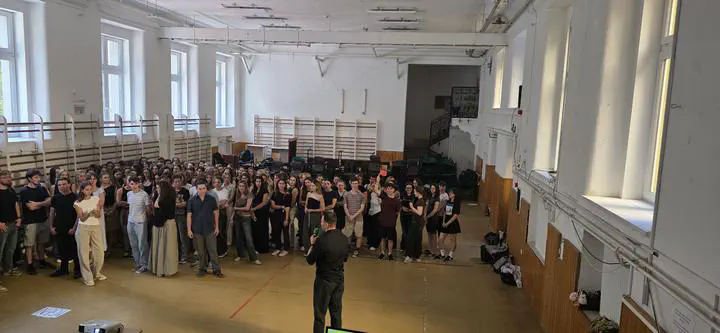
Statistics is often introduced through formulas on a screen. At the first Data Analysis and Statistical Inference class of the 2026/27 autumn semester, Tamás Nagy took a different approach: first-year psychology students became the dataset.
After completing a short anonymous questionnaire, the students used their own positions in the room to make statistical concepts visible. They formed a human contingency table, arranged themselves by height to explore the mean and median, built a life-sized histogram, and demonstrated the correlation between height and shoe size.
The class also explored what random variation looks like. By arranging themselves according to their birthdays, the students could see how apparent patterns can emerge even when two variables are unrelated—and experience the birthday paradox first-hand.
The session ended with a beat. Tamás used the questionnaire results to program an electronic track on site. The structure of the music incorporated the proportion of students who had consumed caffeine, variation in their height, the proportion of left-handed students, and the correlation between height and shoe size.
We hope that the students will remember that statistics is not just about numbers on a screen, but about understanding the world around us and that they can be part of that understanding.
Take a glimpse of the class in the video below:

Tamás Nagy
Assistant Professor
My research interests include stress and emotion physiology, machine learning, computational science and improving psychological science.